Curing and Drying Are Not the Same Thing
A lot of homeowners use “drying” and “curing” interchangeably, but they mean different things. Drying refers to moisture leaving the surface, while curing is the chemical process that gives concrete its strength over time.
Concrete does not simply dry out and harden. It undergoes a reaction between water and cement that continues for weeks. Getting this process right is what determines how long your driveway actually lasts.
The Basic Curing Timeline
Freshly poured concrete reaches enough surface hardness for foot traffic within 24 to 48 hours. At that point it can handle light walking, but it is still far from full strength.
Most residential driveways are ready for passenger vehicles after 7 days. By this stage the concrete has reached a significant portion of its design strength, enough to handle the weight of a standard car without risk of surface damage.
Full structural strength develops over 28 days. That is the industry benchmark for when concrete is considered fully cured, though the process technically continues beyond that point at a much slower rate.
When Can You Actually Drive on It?

The 7-day mark is the practical answer for most homeowners with standard passenger vehicles. Driving on it earlier risks surface cracking, tyre marks, and indentations that cannot be repaired without grinding or resurfacing.
Heavy vehicles such as trucks, trailers, or skips should stay off the surface for the full 28 days. The concrete may look solid well before that, but the internal structure is still developing strength.
What Slows Down or Speeds Up Curing
Temperature
Warmer temperatures speed up the curing reaction, while cold weather slows it down significantly. In Melbourne’s western suburbs, winter pours may take longer to reach the 7-day strength threshold than summer pours.
Very high temperatures create a different problem. If your driveway was poured in hot or windy conditions, be cautious about the early days in particular. Hot, dry, and windy weather affects concrete curing by accelerating moisture loss from the surface, which can cause premature cracking if the concrete is not properly protected during curing.
Moisture Retention
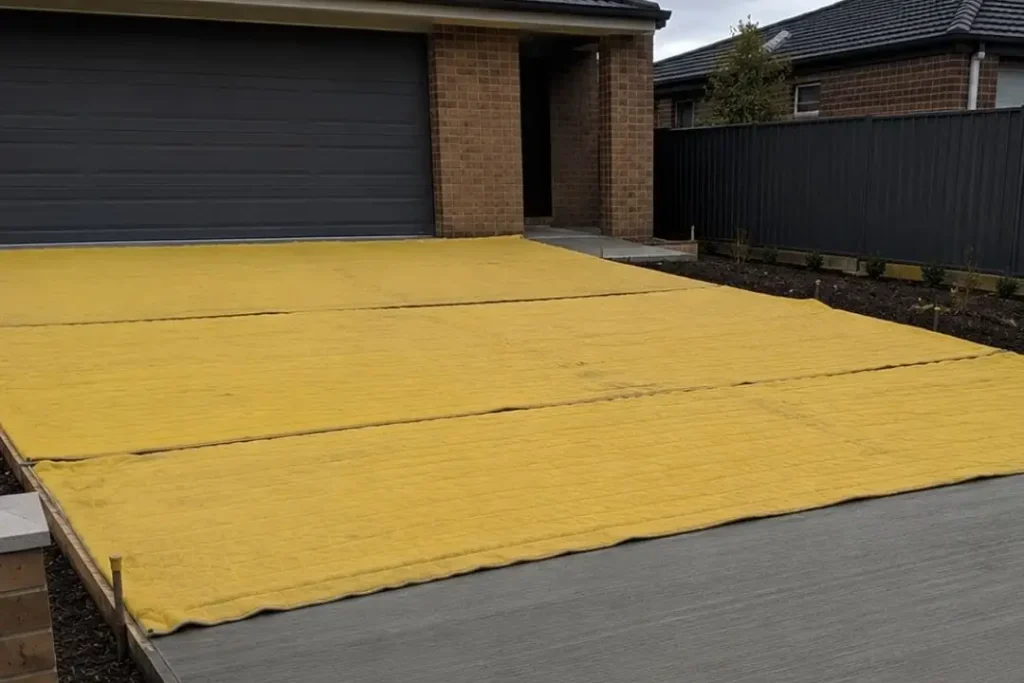
Keeping the surface moist during the early curing period is critical. Concreters often apply curing compounds that seal the surface and reduce moisture loss from freshly poured concrete, particularly on exposed driveways where evaporation is harder to control.
On smaller residential jobs, covering the surface with plastic sheeting or wet hessian is another common approach. The goal is to stop the concrete from drying out too quickly before the curing reaction has had time to develop strength.
Concrete Mix
The mix design affects curing time. Higher-strength mixes with a lower water-to-cement ratio can cure faster and reach strength benchmarks sooner. Your concreter will specify the appropriate mix for a driveway based on expected load and site conditions.
What Happens If You Rush It
Surface cracking is the most common result of driving on concrete too early. These cracks start shallow but allow water to penetrate, which leads to deeper structural damage over time, especially through Melbourne’s freeze-thaw cycles in winter.
Tyre marks and surface indentations from early vehicle use are also permanent. Once the concrete has fully cured, those marks cannot be removed without significant remediation work.
Patience during the curing period is one of the simplest ways to protect a long-term investment. A driveway that cures properly will outlast one that was rushed by years.
Preparing Your Property Before the Pour
Curing starts the moment concrete is placed, so having everything ready beforehand matters. Preparing your yard before the concrete arrives reduces delays and ensures the pour can proceed without interruption, which directly affects how evenly the surface cures.
Access for the concrete truck, cleared formwork areas, and a plan for keeping vehicles off the driveway for at least a week are all worth sorting out before the job starts.
Does the Concrete Finish Affect Curing Time?
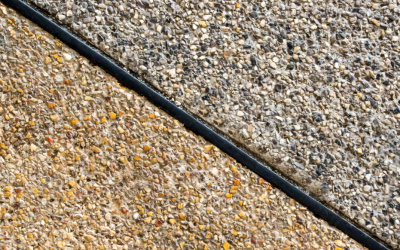
The curing timeline is broadly the same across exposed aggregate, plain concrete, and coloured concrete driveways. The difference lies in how each finish is sealed and maintained after curing.
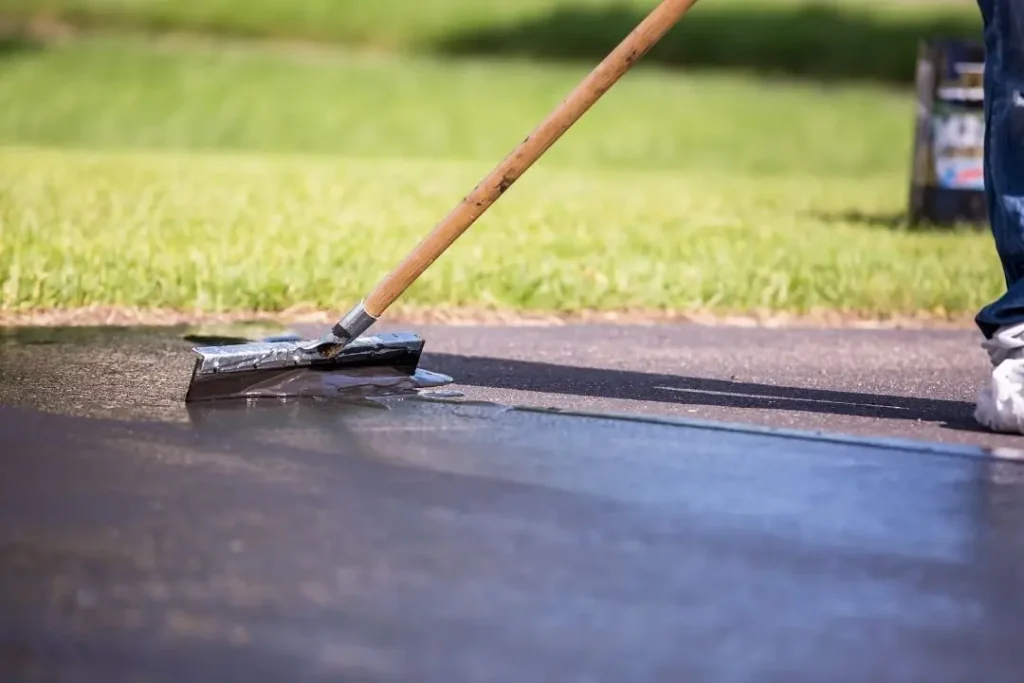
Decorative finishes often require a sealer applied after the 28-day mark to protect the surface and colour. Your concreter should advise on the right sealer and timing for the specific finish used on your job.
The same curing principles apply to other concrete surfaces around the home. Concrete pathways follow the same 24 to 48 hour foot traffic rule and the same 28-day full-strength timeline as driveways.
A Quick Reference for Homeowners
- Foot traffic: safe after 24 to 48 hours in normal conditions.
- Passenger vehicles: safe after 7 days in normal conditions.
- Heavy vehicles and full structural loads: wait the full 28 days.
- Sealing decorative finishes: after 28 days, or as advised by your concreter.
Get Your Driveway Done Right from the Start
A properly poured and cured concrete driveway in Werribee or the surrounding western suburbs should give you decades of reliable use. The curing period is a small window of time that makes a significant difference to the long-term result.
For an experienced concreter Werribee homeowners can rely on for residential driveways, call (03) 9034 8653 or get in touch online to arrange your free quote.